


For the Australian housing market, 2026 can certainly be described as an eventful year. With five interest rate increases, tax changes driving investors underground and broader cost-of-living struggles, it’s no surprise house prices are falling.
Compared to previous housing downturns, the current rate of decline is the steepest on record. As at the end of October, average house price declines across Australia’s capital cities sit around 8.6%, with further falls likely (refer Chart 1).
Chart 1. Australian house prices: cumulative monthly declines (%)

Source: Cotality/YCM, Nov 2026.
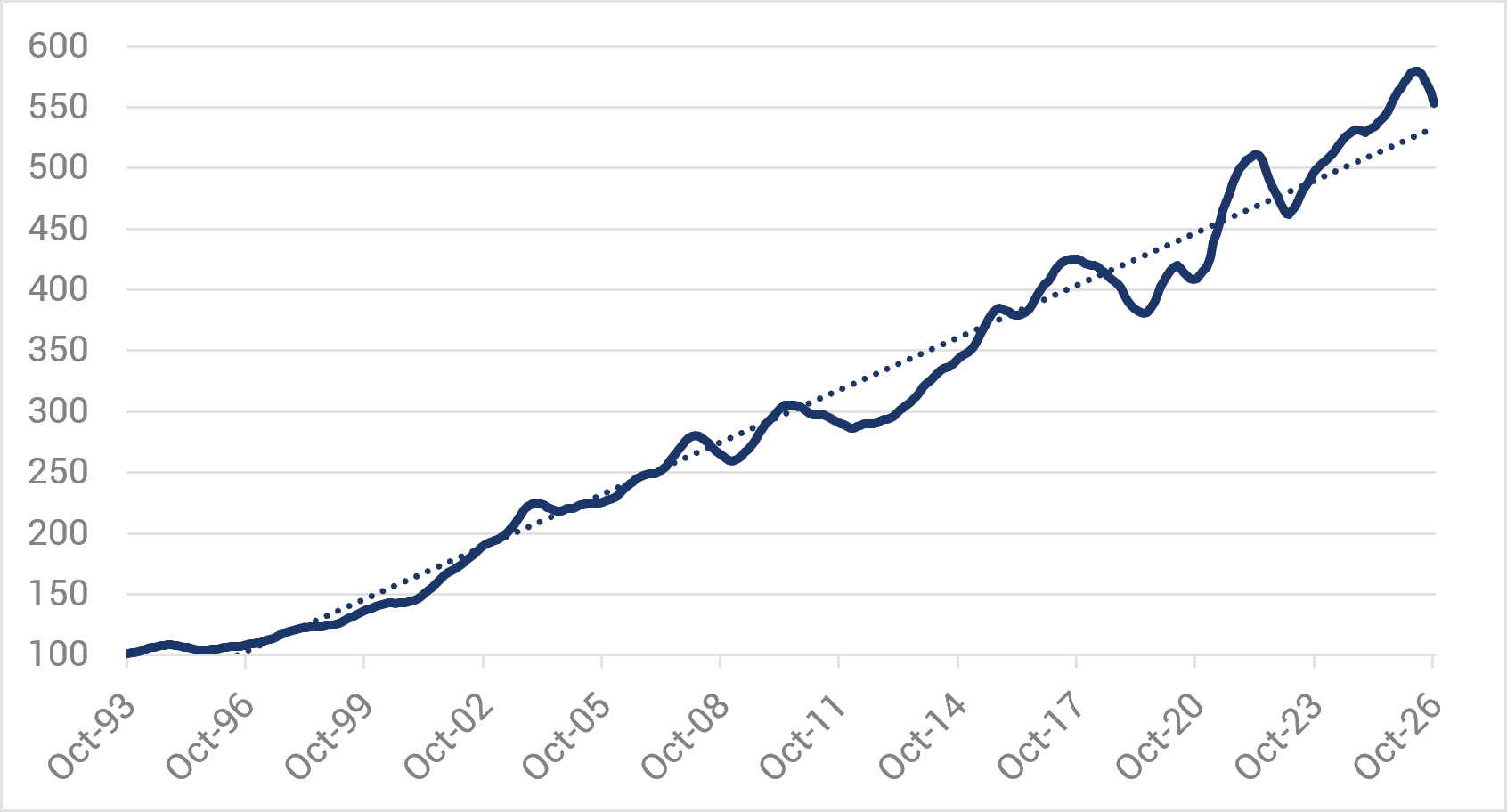
On a longer view, despite the relatively steep downturn thus far in 2026, Australian house prices remain above their ~30-year trend of ~5% p.a. compound growth (refer Chart 2). With further declines coming, house prices will likely move below the trend line, consistent with previous downturns in 2010-12 and 2017-19. Overall, given the most recent interest rate increases in September and November, house price declines of ~15% appears likely.
Chart 2. Indexed Australian house prices (1993 = 100)
Source: Cotality/YCM, Nov 2026.
In the RMBS market, the decline in house prices has coincided with burgeoning new supply. Securitised issuance for 2026 to the end of September had already smashed last year’s record (refer Chart 3). In the third quarter alone, total RMBS issuance eclipsed ~$35bn as issuers took advantage of competitive spreads ahead of US midterms and weaker sentiment generally.
Chart 3. Annual Australian securitisation issuance ($bn)

Source: WBC/YCM, Nov 2026.
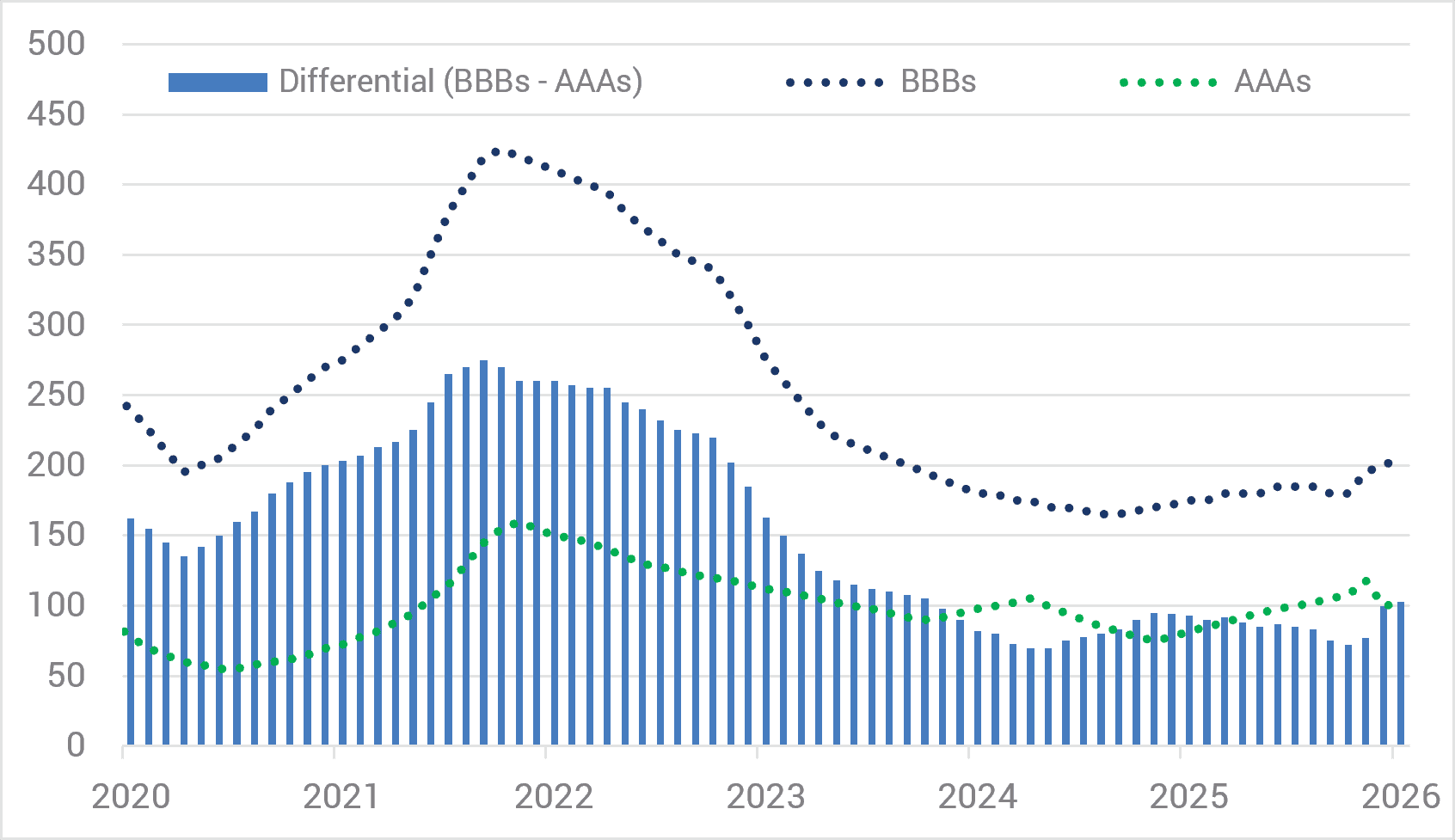
Unprecedented primary issuance has caused indigestion and reversed a significant period of spread contraction, particularly in the mezzanine tranches (refer Chart 4). Both triple A and triple B credit spreads widened over the quarter with the differential between the two increasing ~20bps, off historic lows. Given the low starting point, mezzanine credit spreads have further room to widen as conditions in the housing market further deteriorate.
Chart 4. RMBS spreads (bps) – AAA/BBBs (differential)
Source: YCM, WBC, Nov 2026.
While we expect negative sentiment to drive underperformance in mezzanine RMBS credit spreads, how likely is it that the decline in house prices will also lead to impairments? As the securitised fanatics will tell you, there has never been a dollar of loss in any publicly rated Australian RMBS tranche i.e., from triple A all the way down to single B. Moreover, as is also commonly understood, publicly rated RMBS tranche impairments require both lower house prices and higher defaults. A combination of house price declines and defaults above a certain threshold would generate losses sufficient to fully impair seller note equity (commonly referred to as unrated ‘G’ notes) and also impact rated tranches.
In the prime segment, loss absorption in seller notes results in robust subordination for all publicly rated RMBS tranches (refer Table 1). For instance, at the single B level, defaults and house price declines would need to exceed 3% and 22% respectively to generate impairments, with progressively higher defaults and lower house prices required for impairment above single B.
Table 1. Prime mortgage loss absorption by publicly rated tranche

Source: YCM, Nov 2026.
If we assume it’s possible for house prices to decline by more than 22% in the current downturn, how likely is it for defaults to also exceed 3% to generate an impairment? Unlike house price declines, household defaults are more dependent on the unemployment rate and mortgage serviceability. Given mortgage lending is recourse to other assets in Australia, borrowers cannot voluntarily walk away from negative equity positions as occurred in the US during the GFC with the ‘jingle mail’ phenomena. The current unemployment rate in Australia is 4.7% (refer Chart 5) with our expectation being unemployment will continue to gradually increase over the next 12 months to ~5.5% this time next year.
Chart 5. Australian unemployment (%)

Source: YCM, ABS, Nov 2026.
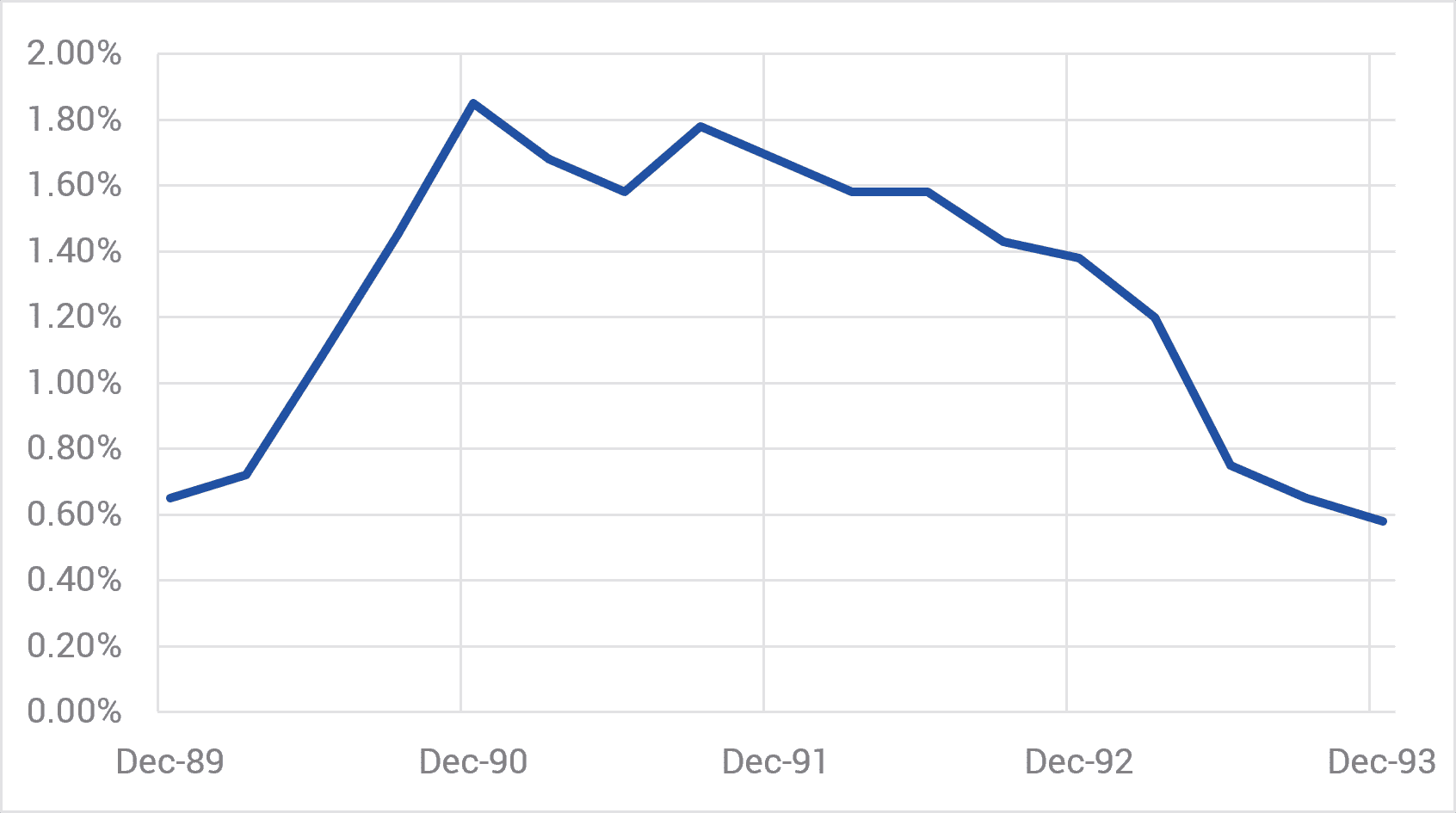
While we are not expecting a significant increase in unemployment over the next 12 months, it is worth looking at just how sensitive mortgage defaults generally are to increasing unemployment. In the Australian context, you’d need to go back to the early 1990s recession for the last double digit unemployment event. During that period, unemployment reached 11% and household defaults peaked at ~2%, below the 3% implicit subordination at the single B level (refer Chart 6).
Chart 6. Australian household and business defaults during 1990s recession (%)
Source: RBA/YCM, Nov 2026.
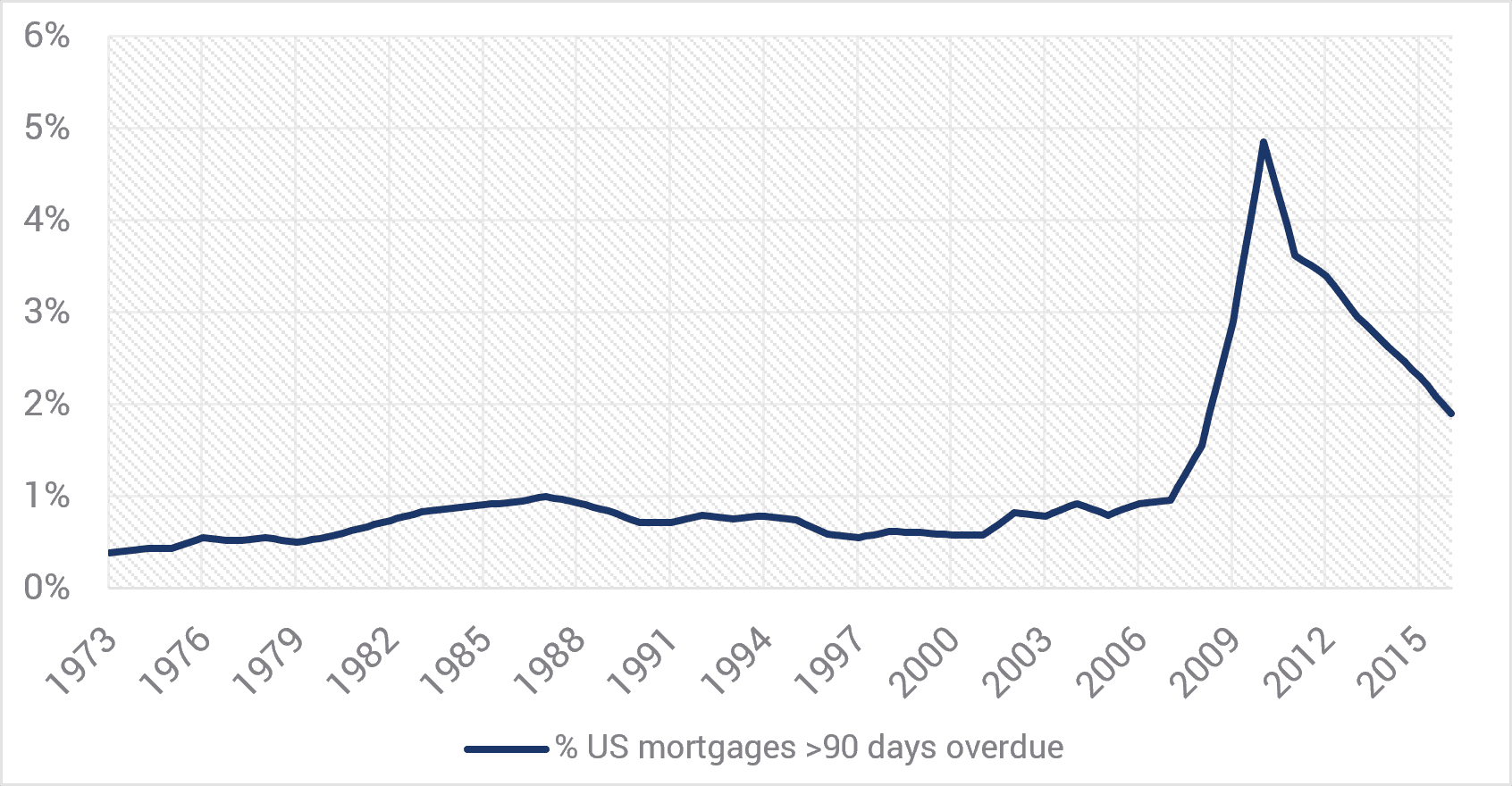
By contrast, the US experience during the GFC was far more detrimental where double digit unemployment generated ~5% defaults (refer Chart 7). However, as mentioned, US mortgages are non-recourse, resulting in people literally mailing in their keys and walking away. The US also had an excess supply of housing going into the GFC, which generated higher defaults and more significant declines in house prices of ~25%. By contrast, Australia has a shortage of housing moderating price declines during downturns.
Chart 7. US mortgage defaults (%)
Source: RBA/YCM, Nov 2026.
Regardless of your outlook for house prices and defaults, given the negative sentiment, it’s certainly an opportune time to be underweight Australian RMBS, particularly in the mezzanine tranches. By virtue of its very large $2.4 trillion opportunity set, the actively managed Yarra Higher Income Fund’s current exposure to RMBS/ABS is below 3% (refer Chart 8), and very well positioned to ride out the housing correction and increase allocations to the sector at much wider spreads through 2027.
Chart 8. Yarra Higher Income Fund – RMBS/ABS exposure (%)

Source: YCM, Nov 2026.
In the closing months of 2026, the Yarra Higher Income Fund is well-placed to generate further strong performance over the next 12 months, with an estimated running yield approaching 8% from a liquid investment grade portfolio and a strategic duration position expected to benefit from rate cuts in 2027.
The message for investors is therefore one of patience rather than panic. Australia’s publicly rated RMBS tranches remain structurally resilient, but with spreads likely to face further pressure, we see little reason to move early. The Yarra Higher Income Fund’s low exposure leaves it well positioned to weather the correction and take advantage of more compelling valuations as opportunities emerge.



0 Comments