


Anyone old enough to remember the 1975 Skyhooks classic “Ego is Not a Dirty Word” would pick the not-too-subtle ode in our title. But since the pandemic, it appears alpha in credit has become somewhat of a dirty word for many credit investors.
How did we get here?
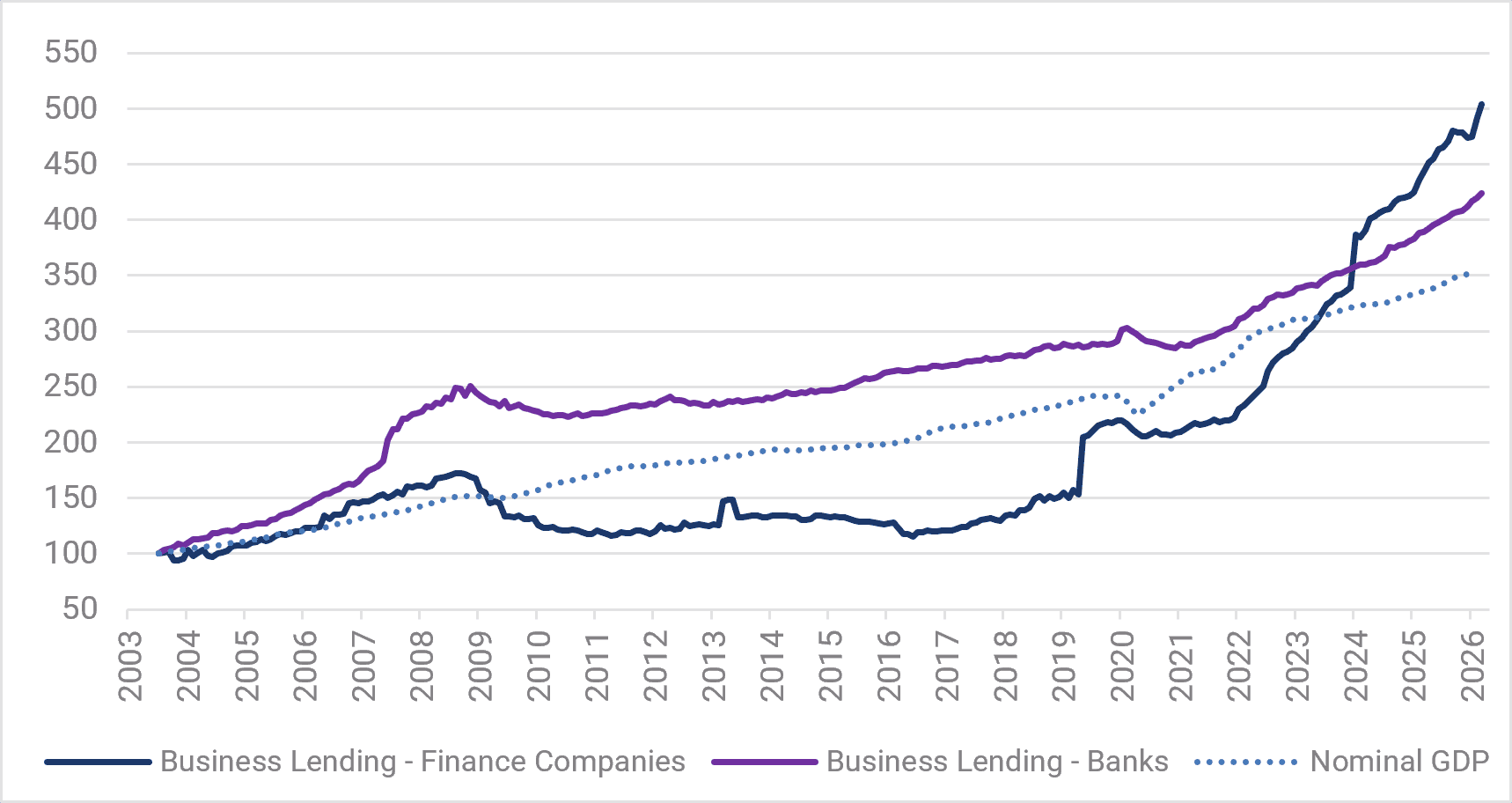
Exhibit A today is unquestionably the exponential growth in Australian private credit outstandings. Sitting today at ~$200bn, the sector offers proof of investors gravitating toward more systemic beta exposure such as real estate development debt, rather than the abundant alpha opportunities from liquid credit assets. Private credit growth, represented by finance company lending to corporates, has easily eclipsed traditional bank lending and nominal GDP (refer Chart 1). Its growth over the past 2-3 years has been nothing short of remarkable.
Chart 1. Australian private credit – growth in outstandings (2003 = 100)
Source: RBA, YCM, Jul 2026.
Private credit managers have been extremely successful in marketing the asset class’s virtues of high yields with supposedly low volatility and sufficient underlying security. Perhaps too successfully, with this exponential growth resulting in sub-optimal, higher LVR lending becoming more prevalent. The current souring of ~$3.3bn in private credit loans to property developer Bathla will not be the final private credit-funded developer to default as systemically higher interest rates, declining house prices and escalating building costs work their way through a sector that was already showing clear signs of distress. Rising problem loans and constrained liquidity appear destined to occupy the news for the foreseeable future.
A broader opportunity set
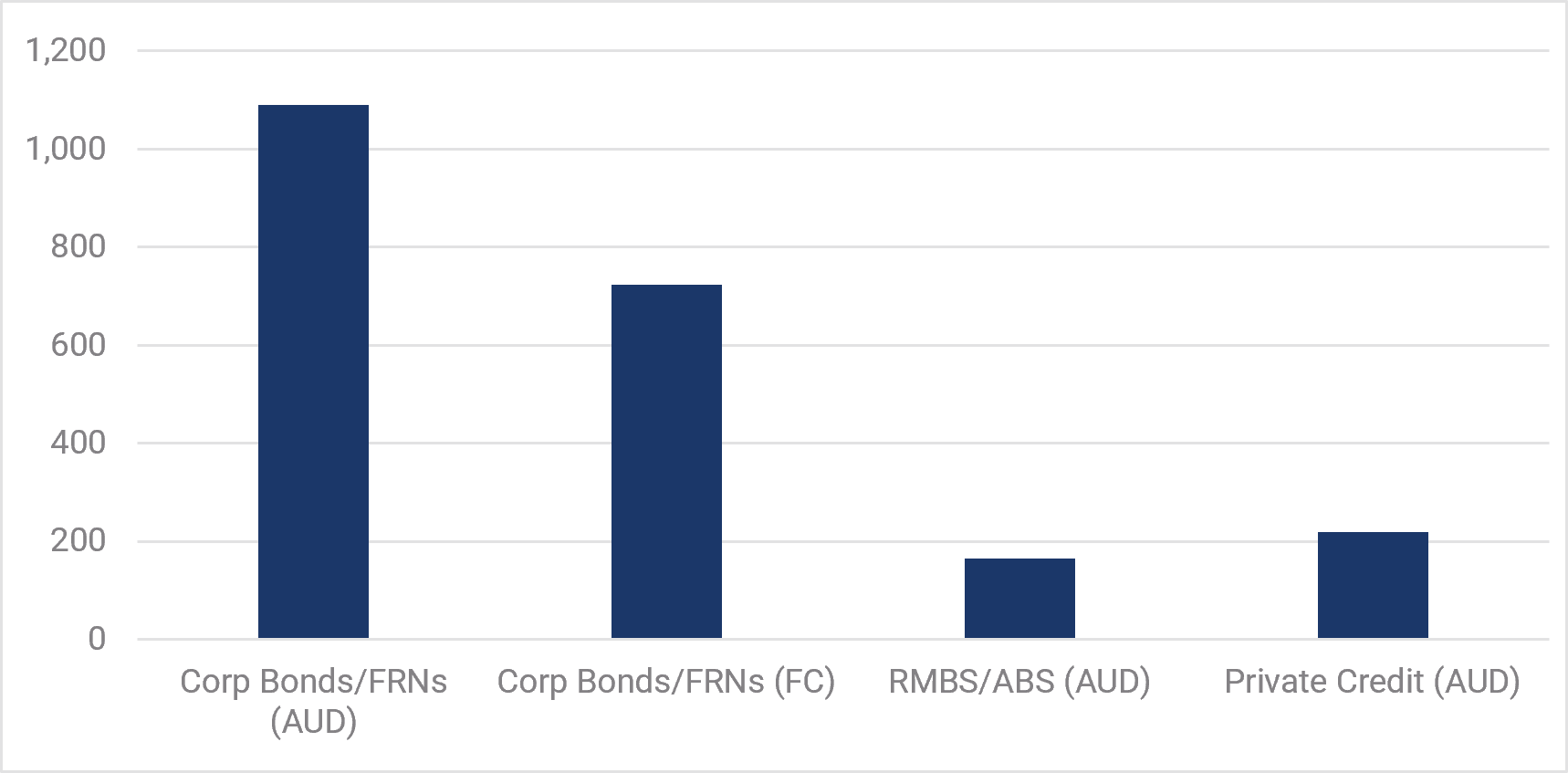
Private credit’s reckoning is unquestionably an opportunity for those managers investing across the full spectrum of Australian multi sector credit’s $2.2trn opportunity set. Whereas the inherently more illiquid private credit represents just 10% of system-wide credit market outstandings, a truly multi-sector focus enables investors to target alpha, optimise risk-adjusted returns and enhance liquidity (refer Chart 2). Its through-the-cycle virtues are now becoming clear.
Chart 2. Australian credit market – outstandings ($bn)
Source: RBA, YCM, Jul 2026.
Flexibility that pays off
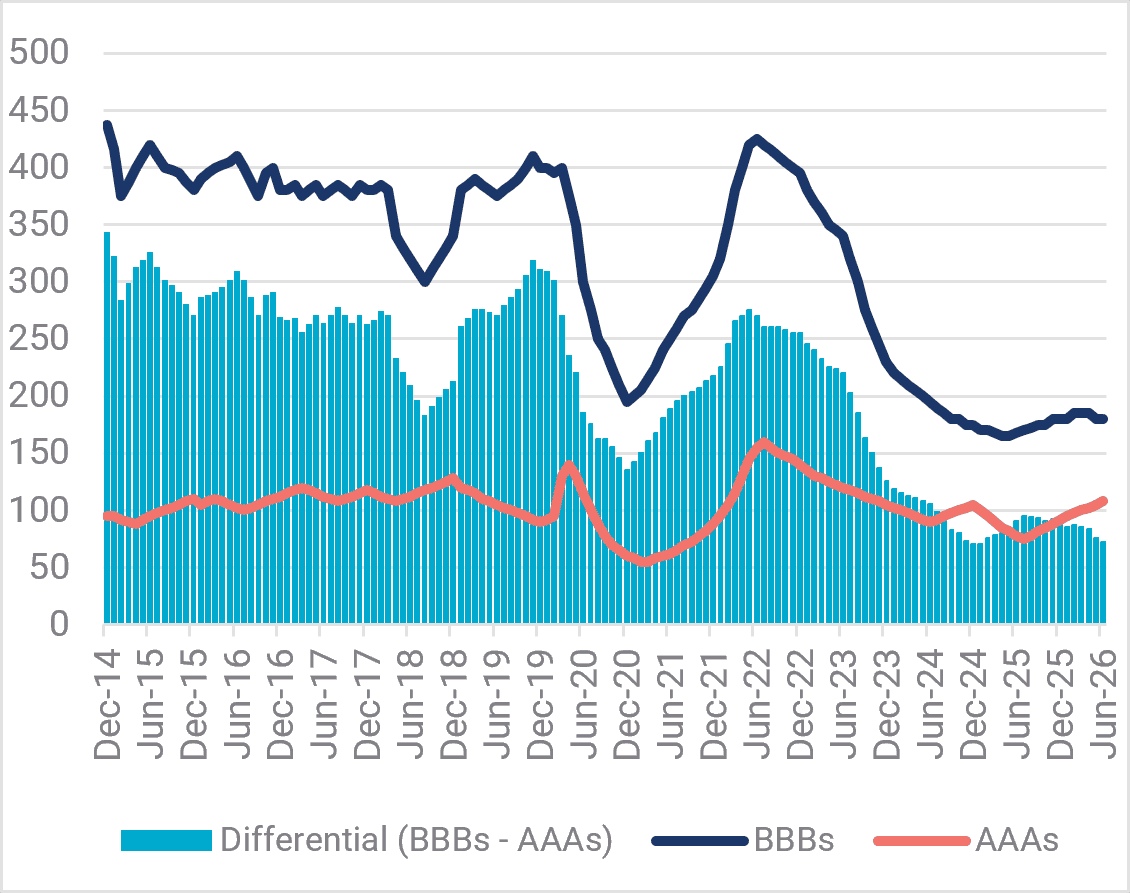
The opportunities in Residential Mortgage-Backed Securities (RMBS) over the past five years demonstrate the inherent flexibility afforded by a multi-sector approach. Mezzanine RMBS credit spreads have widened and contracted significantly over the past five years, with BBBs currently at very tight levels compared to both historical levels and relative to AAA credit spreads (refer Chart 3).
Chart 3. RMBS spreads – AAA/BBBs differential
Source: WBC, YCM, Jul 2026.
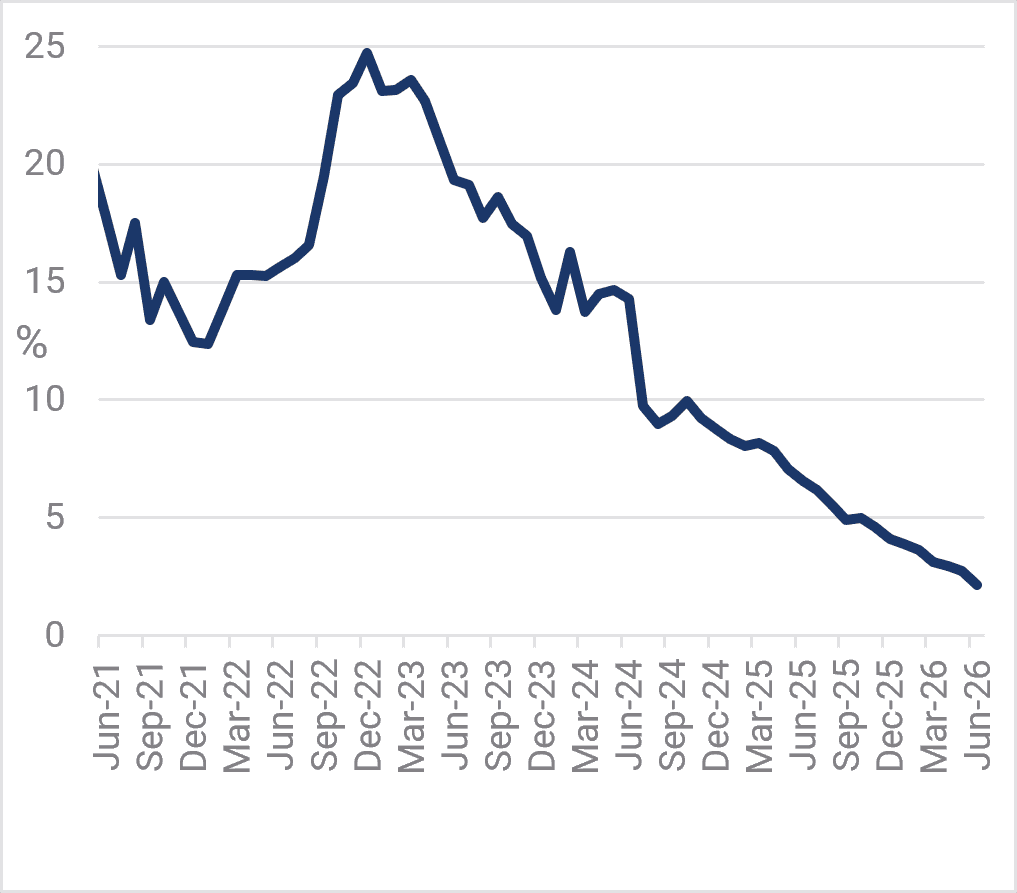
Chart 4. Higher Income Fund – RMBS exposure (% of AUM)
Source: WBC, YCM, Jul 2026.
Our own approach to RMBS has effectively mirrored the movement in mezzanine credit spreads and underlying risk-adjusted returns. Taking full advantage of a dislocated market and much wider spreads, our own allocations to RMBS peaked at 25% in 2022/23 and progressively rolled down as credit spreads tightened to uneconomic levels. Currently, our allocation to RMBS is at ~3% today (refer Chart 4), leaving us in a strong position to weather sector underperformance as house prices correct. We will look to rebuild our exposure opportunistically, redeploying capital only once spreads widen enough to properly compensate investors for the asset class’s underlying risk.
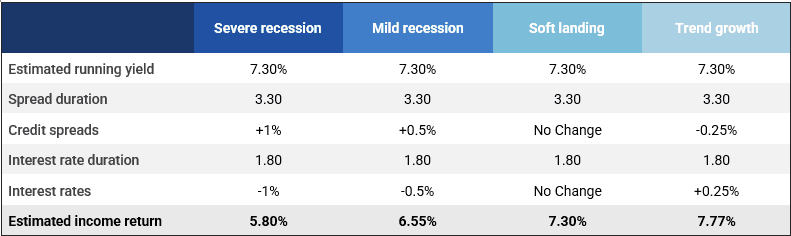
Our multi-sector strategy blends public debt, syndicated loans and warehouse facilities, with zero allocation to real estate development finance. Public debt serves as the portfolio’s liquid foundation, providing the flexibility to capitalise on relative value opportunities and adjust positioning as credit spreads move. Our approach to syndicated loans and warehouses provides diversified exposure to higher-yielding assets that enhance returns while maintaining our disciplined risk-adjusted framework. Importantly, the allocation to warehousing provides access to some attractive illiquidity premia but is capped at 20% to ensure this incremental yield never comes at the expense of overall liquidity. The combination of this asset mix is focused on maximising risk-adjusted returns while retaining through-the-cycle liquidity. The strategy is currently generating an attractive 7.3% running yield (refer Table 1), a level we believe compares favourably on a risk-adjusted basis to both public credit alternatives and the illiquid, concentrated exposures now prevalent across private credit.
What this means for returns
At these yields, returns are not only attractive but are also defensive. While we believe the Australian economy is heading for a soft landing in 2027 and income returns will remain around current levels for the next 12 months, current high income has also significantly reduced the likelihood of negative returns. Over a 12-month period, credit spreads would need to widen by an improbable 250bps to generate negative returns. Moreover, given the usual negative correlation between credit spreads and government bond yields in meaningful risk-off events, the combination of high income and strategic duration should provide a pathway to attractive returns in most theoretical scenarios.
Table 1. Attractive and defensive income for the period ahead
Source: YCM, Sept 2026.
In plain terms: even in a mild recession scenario, a multi-sector portfolio is estimated to return 6.55%, and it would take a severe recession, with credit spreads widening by a full 1%, to pull returns down to 5.80%.
Core income, plus alpha
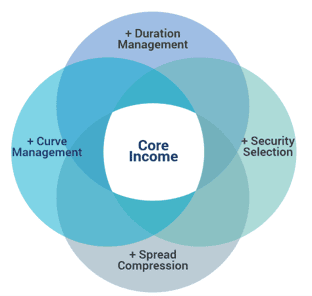
Beyond offering attractive core income, alpha generation from security selection, drawdown protection from duration/curve management and the generation of incremental income gains from spread compression as securities edge closer to maturity are all central pillars to our approach (refer Chart 5).
Chart 5. Multi-sector at work – core income plus
Source: YCM, Sept 2026.
Looking ahead to the next 12 months, we are in a strong position to deliver 8%+ total returns from our investment-grade quality portfolios, building on an estimated core income of 7.3% with alpha generated from additional levers. Total returns in this range are akin to average Australian equity market returns with far less volatility and through-the-cycle liquidity, providing a superior offering to pure-play Australian private credit.
Alpha isn’t confined to the segment attracting the most headlines. As the credit cycle turns, we believe the advantage will go to managers who can find relative value across the whole opportunity set — not just one corner of it.

0 Comments